


Career Center
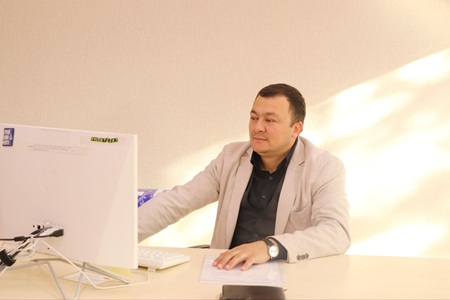
Rustamov Otabek Akbarovich
Career Center room 104
Phone: (66) 240-67-70
The career center (or career service) at a university is a structure aimed at preparing students and graduates for the labor market, supporting professional development, and assisting in employment placement. It helps students gain practical experience, find internships, and secure job opportunities. In Uzbekistan, particularly at specialized higher education institutions like the Silk Road International University of Tourism and Cultural Heritage, the career center's activities are tailored to the needs of the tourism and cultural heritage sectors, focusing on training professional personnel and integrating them into the labor market. This university was established in 2018 under the Shanghai Cooperation Organization (SCO) member states to develop historical and cultural ties, with an emphasis on tourism infrastructure, cultural heritage management, and international tourism standards.
General Responsibilities of the Career Center at the University
The career center performs the following core functions:
Connecting students with the labor market: Job postings, vacancies, and partnerships with companies for graduates.
Organizing internships and practical training: Placing students in tourism enterprises, museums, hotels, and cultural heritage sites.
Career counseling and training: Workshops on resume writing, interview preparation, and soft skills (e.g., hospitality, language proficiency).
Developing partnerships: Contracts with businesses in tourism and cultural heritage (hotels, travel agencies, Cultural Heritage Agency).
Monitoring and analysis: Tracking graduate employment rates and reporting.
These functions are implemented based on decrees of the President of the Republic of Uzbekistan (e.g., PQ-3815, 2018), which require universities to align personnel training with labor market demands.
Special Focus Areas in Tourism and Cultural Heritage
At the Silk Road International University of Tourism and Cultural Heritage, the career center targets the following specializations:
Tourism directions: Guide-interpreter services, tourism management, restaurant business management, logistics, and economics.
Cultural heritage directions: Museology, archaeology, cultural heritage management, creative industries.
The career center's responsibilities in these fields include:
Internship and practical training organization: Placing students in cultural heritage sites (museums, archaeological sites), tourism infrastructure (hotels, travel agencies), and protected natural areas. This is conducted using the "mentor-apprentice" method in collaboration with the Tourism Committee and the Ministry of Culture.
International cooperation: Joint internship programs with SCO member states (China, Russia, etc.), and sending students to foreign universities and research centers (for master's and PhD programs).
Personnel demand planning: Establishing quotas in tourism and cultural heritage based on labor market forecasts. For example, aiming to reach 520,000 employed in tourism by 2026.
Digital and innovative training: Training in digital tourism (online booking, virtual tours) through the Tourism Information Technology Center.
Graduate employment placement: Providing vacancies in collaboration with the Tourism and Cultural Heritage Agency, hotel chains, and international organizations (UN Tourism).
Responsibility Type | General Responsibilities (All Universities) | Specialized Responsibilities in Tourism and Cultural Heritage |
Internship Organization | Internships in enterprises and organizations | Internships at cultural heritage sites (museums, archaeological sites) and tourism infrastructure (hotels); focus on ecotourism. |
Partnerships | Contracts with local companies | International (SCO countries) and government bodies (Tourism Committee, Cultural Heritage Agency); exchange programs with foreign universities. |
Training | Resume and interview workshops | Specialized training in hospitality, guiding, cultural heritage preservation; language and digital skills. |
Monitoring | Graduate employment statistics | Tourism market demand forecasting; contribution to creating 520,000 jobs. |